
Annie's Holy Grail of Long-Haul Travel
A long flight doesn't have to wreck the first two days of your trip. After nearly 30 years of putting myself, friends and now clients on planes, these are the habits, packing picks and small courtesies that make the biggest difference between arriving frazzled and arriving ready.
(This is a living list. I add to it every time a client (or I) learns something new on the road.)
Before you go
The smoothest flights are mostly decided in the two weeks before you leave.
Passport check. Make sure it's valid at least six months past your return date and has blank pages. Snap a photo of the ID page and email it to yourself.
Travel insurance. Buy it early. Some of the best benefits, like Cancel For Any Reason, are only available within a short window after your first payment. Closer to departure you can still get medical, evacuation, delay and lost-bag coverage. Ask me, or buy directly through Travel Insured.
Prescriptions. Pack enough for the whole trip plus three extra days, in original labeled bottles, in your carry-on. Carry a written list of medications and dosages.
Talk to your doctor if you have circulation issues, recent surgery, pregnancy or heart or lung conditions. Ask about compression socks and anything else specific to long flights.
Choose seats early. Check in the moment the window opens (usually 24 hours out) and confirm seats are still together.
Download the apps. Your airline's app for gate changes and boarding passes, WhatsApp for staying in touch abroad, and Google Translate with the offline language pack.
Download entertainment before you leave home. Airplane Wi-Fi is slow and pricey, and seatback screens do fail.
Call your bank and phone carrier. Set travel notices and pick an international plan so you're not surprised by charges.
Start shifting your sleep a day or two ahead if you're crossing several time zones.
The carry-on kit
If your checked bag takes a detour, this bag should get you through the first 24 hours.
Comfort
Neck pillow that actually supports your chin (memory foam or a wrap style)
Contoured eye mask and foam earplugs or noise-canceling headphones
Light scarf or wrap that doubles as a blanket
Compression socks
Slip-on shoes or cozy socks for the cabin
Health and hygiene (liquids in 3.4 oz / 100 ml bottles, one quart bag)
Medications, plus a few basics: pain reliever, antacid, motion sickness tablets, anti-diarrheal
Lip balm, hand cream and a small face moisturizer or hydrating mist
Toothbrush, toothpaste and deodorant
Hand sanitizer and disinfecting wipes for the tray table and armrests
Saline nasal spray and eye drops
Practical
Empty refillable water bottle
Phone charger, a charged power bank and a universal adapter
Pen, for customs or arrival forms
Copies of your passport, itinerary and insurance policy
A change of clothes and underwear
Healthy snacks: nuts, protein bars, dried fruit
What's in Annie's bags
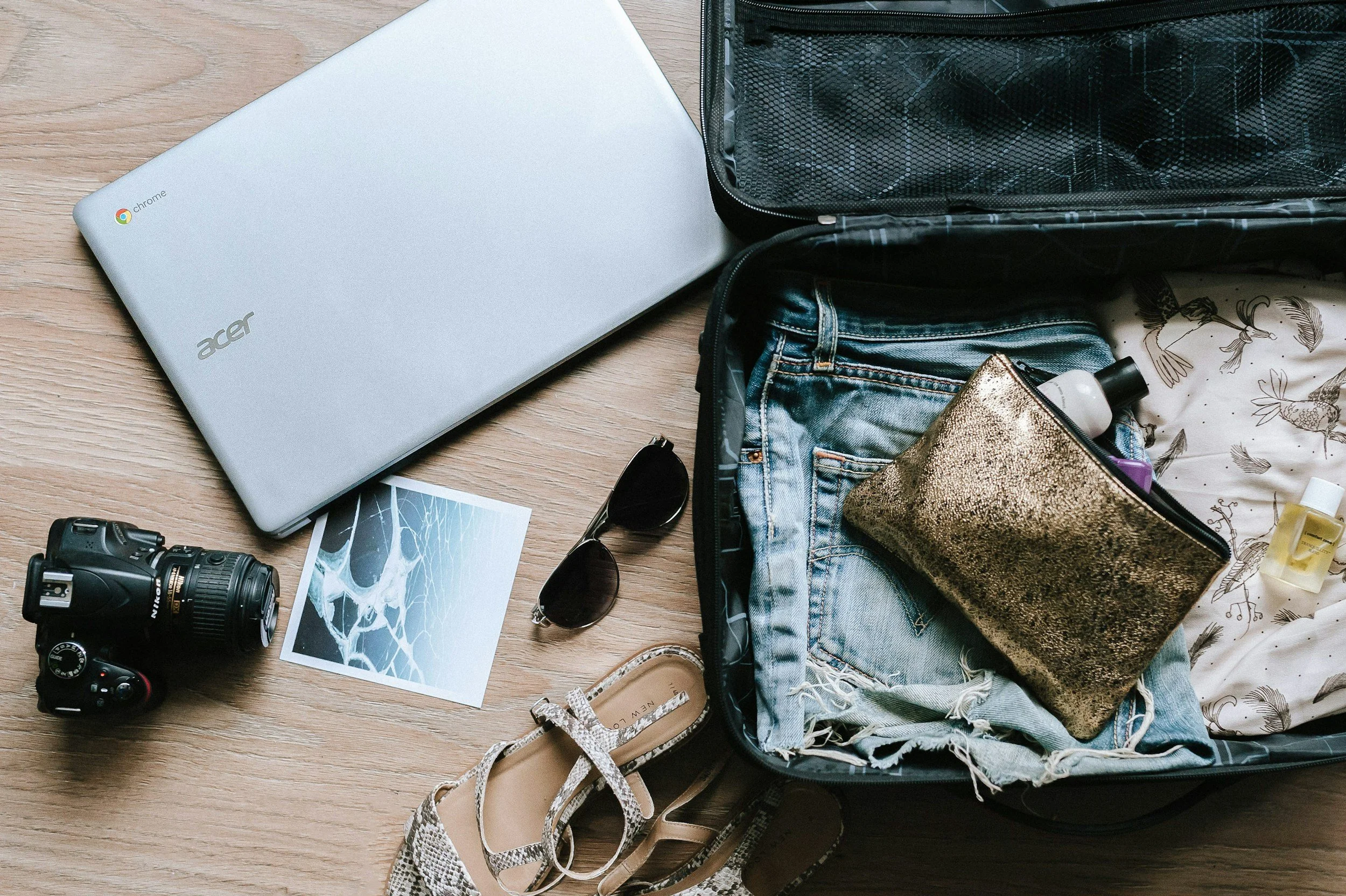
This is exactly what I pack for every long trip. Two bags keep everything within reach: a backpack that slides under the seat, and a fanny pack for passport, phone and cards.
My cosmetic and medical bag
Band-Aids and antiseptic
Ibuprofen
Nausea medicine
Decongestant and allergy medicine
A handful of cough drops (I bring five)
Emergen-C packets
Smooth Move tea and digestion medicine, because travel throws everyone's system off
Travel-size shampoo and conditioner
Toothpaste, toothbrush and flossers
Deodorant
Sanitizing wipes and face wipes
Lotion
My comfort kit
Memory foam neck pillow
Eye mask
Noise-canceling headphones
Compression socks
Travel slippers
A tiny blanket
A tiny quick-dry towel
What to wear
Dress in soft layers you could sleep in, but that still look put-together walking off the plane.
Breathable, stretchy pants or joggers. Skip tight jeans and stiff waistbands.
A layer you can add or remove: cabins swing from warm on the ground to chilly at altitude.
Shoes you can slip off and on easily. Feet swell on long flights.
Minimal metal and jewelry to speed up security.
Compression socks, put on before you board.
In-flight comfort
Water, movement and sleep timing do more for you than any gadget.
Hydrate. Cabin air is very dry. Aim for a glass of water, or even better, hot tea, every hour you're awake and refill your bottle after security.
Go easy on alcohol and caffeine. Both dehydrate you and disrupt sleep.
Move every hour or two. Walk the aisle, and do seated ankle circles, calf raises and shoulder rolls in between.
Set your watch to destination time as soon as you board, and sleep or stay awake to match it.
Eat light. Heavy, salty meals add to bloating and swelling. Your own snacks help when meal times don't line up with your body clock.
Make a sleep nest. Mask, earplugs, pillow, blanket, and your seatbelt fastened over the blanket so the crew won't wake you.
Keep essentials in the seat pocket (water, lip balm, headphones) so your bag can stay overhead.
Traveling as a group or family
When generations travel together, the kindest seating plan puts people where their needs are, not where their boarding pass happened to land.
Aisle seats go to anyone who needs to get up often: frequent restroom trips, medical needs, stiff knees or circulation concerns.
Window seats suit older travelers or anyone who wants to rest undisturbed and lean against the wall.
Middle seats are the job of the youngest and most flexible travelers. Teens and young adults, this is your chance to be a hero.
Talk about it before you board, not in the aisle. Swap boarding passes at the gate so seating goes quickly.
Look out for each other. Help lift bags into the overhead bin, keep an eye on anyone moving slowly through connections, and do a quick headcount at every gate.
Share privately. If you have a health need, tell your group leader quietly so the plan can quietly account for it.
Pair up. Give everyone a buddy for connections, restroom breaks and baggage claim.
When you land
The first day sets the tone for the whole trip.
Get outside in daylight as soon as you can. It's the fastest jet lag reset there is.
If you must nap, keep it under 30 minutes and before mid-afternoon.
Eat meals on local time, even if you're not hungry.
Keep drinking water, and save the big celebration dinner for night two.
Text home that you've arrived, and send your group leader a quick check-in.
Annie's travel tips
Let your phone translate a real conversation. In Google Translate, set both languages, then open the Conversation feature to talk back and forth with someone. Use the Camera feature to read menus and signs instantly.
Turn your calculator into a currency converter. On an iPhone, open the Calculator app, tap the calculator icon in the bottom corner, turn on Convert, and choose Currency. Set it to the local currency and US dollars, and type in any price. On Android, type the amount into Google, like "50 euros in dollars." Set it up at home while you have Wi-Fi so the rates are loaded.
Annie's last-look checklist
☐ Passport valid 6+ months, photo saved
☐ Travel insurance purchased
☐ Medications packed in carry-on, with a written list
☐ Seats checked and group seating sorted
☐ Apps downloaded, entertainment saved offline
☐ Bank and phone notified
☐ Carry-on kit packed, change of clothes included
☐ Compression socks on, water bottle empty for security
Questions, or want help with insurance or your next trip? Reach me at 843-302-2188 or find me at themodernwanderer.net. Happy travels!